Hi-fi for your room

Not a shopping list of components, but a system built around how you actually listen.
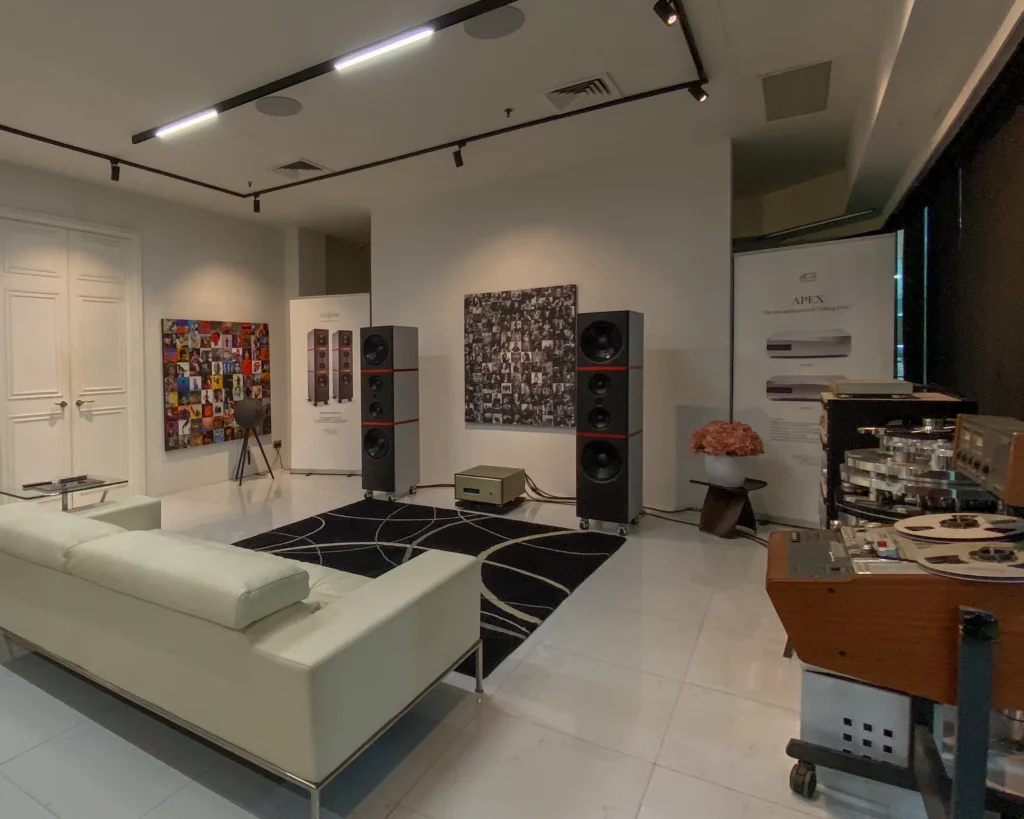
Listening room with two tall black floorstanding speakers, a cream sofa, framed record-sleeve artwork and a reel-to-reel tape machine

What we mean by hi-fi

A hi-fi system reproduces music across two channels, built to suit one room. It is not a soundbar, not a smart speaker, and not a rack of components chosen to look impressive. We start with the room itself, its size, its hard surfaces, where you sit, and with what you actually listen to and how loud. From there we choose the fewest components that do the job well. These three steps stay the same for every client.

The room, first

We start with where the system will live: room size, seating, how much sound absorption is already there. A speaker that suits a large room can overwhelm a small one, so this comes first.

What you actually listen to

Vocal jazz, orchestral scale, electronic bass, film soundtracks: each asks something different of a system. We ask what fills your evenings, and build toward that rather than a generic idea of good sound.

The system, assembled

Source, amplification and speakers are chosen as one set, matched to each other and to the room, then set up in place. Nothing is added because it photographs well, and nothing is left out.

Three ways to build a system

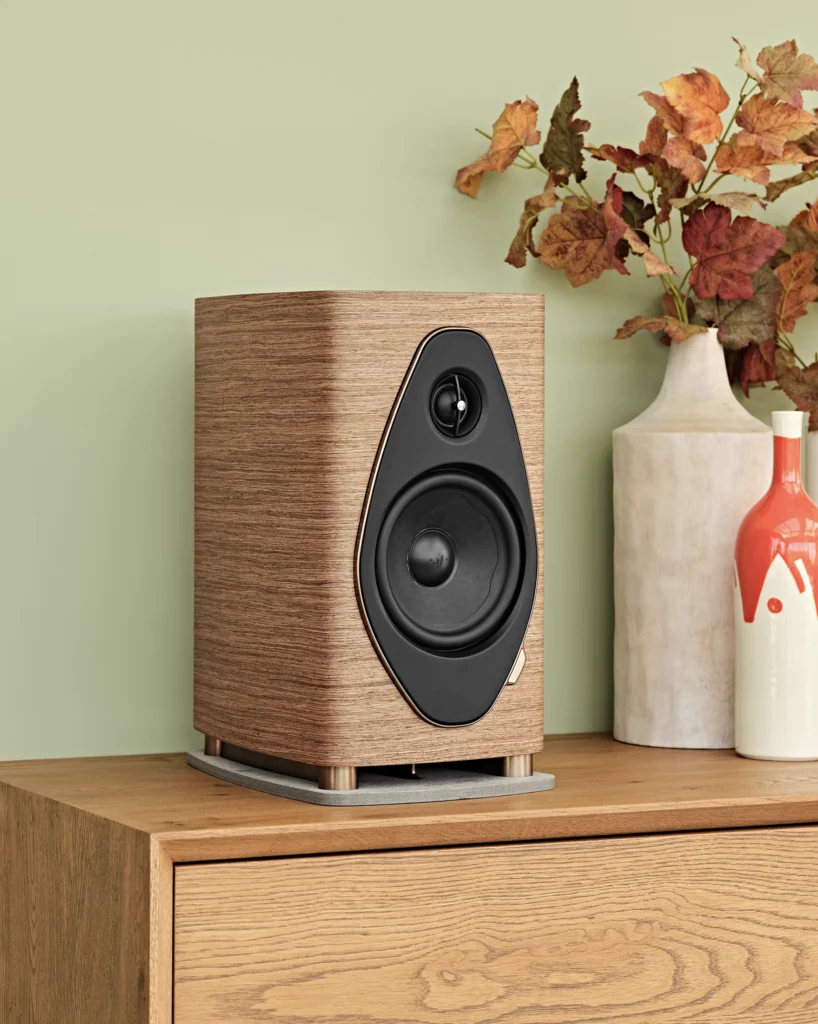
A walnut Sonus Faber stand-mount loudspeaker on an oak sideboard against a sage green wall, beside pale ceramic vases.

Bookshelf speakers

Bookshelf speakers sit on stands or a shelf and pair with a compact amplifier. Sonus Faber names its models for the Cremonese violin makers, Amati, Guarneri, Stradivari, and hand-builds each cabinet in wood. Elipson‘s rounded cabinets trace a design heritage to the 1960s. Both give up some low-end weight against a floorstander but gain flexibility to place and move easily.
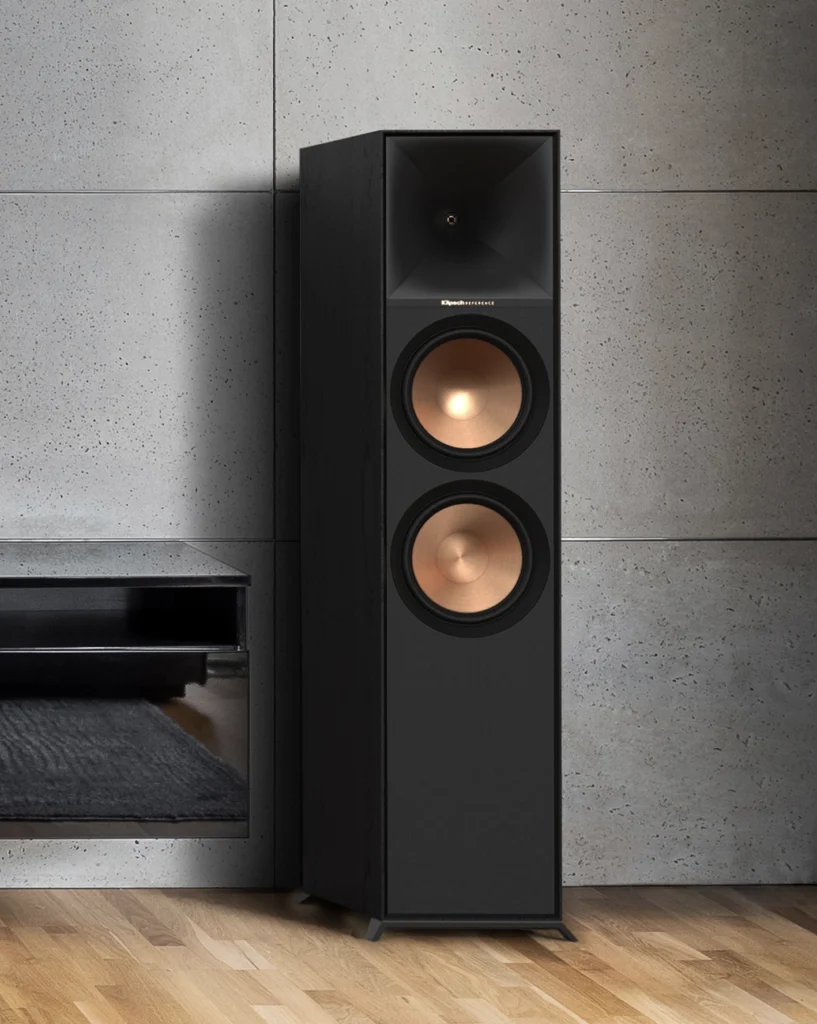
A black Klipsch Reference floorstanding loudspeaker with a horn tweeter and two copper woofers, against a concrete wall on a wood floor.

Floorstanding speakers

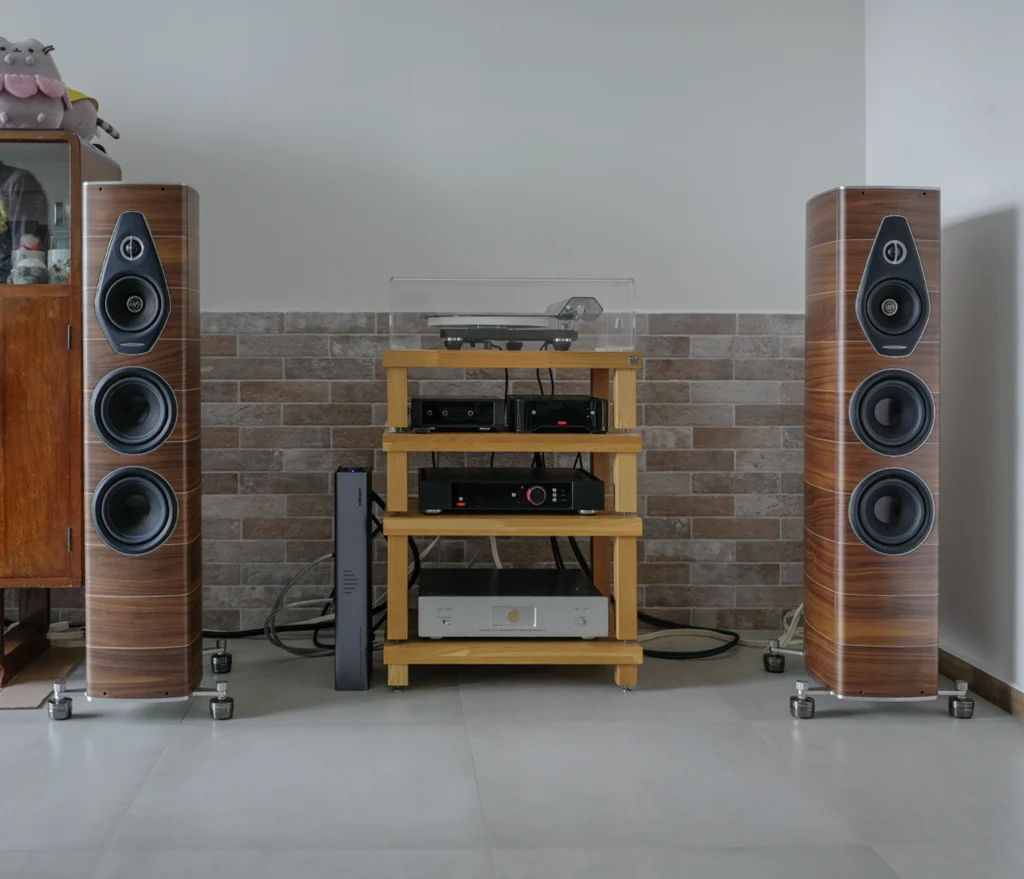
Floorstanding speakers reach lower and fill a larger room, driven by a separate amplifier. Stenheim, in Switzerland, machines its cabinets from aluminium rather than wood, and Tannoy has used the same Dual Concentric driver since the 1940s. Because the right pair depends on the room, floorstanding systems are quoted individually rather than boxed as a set.
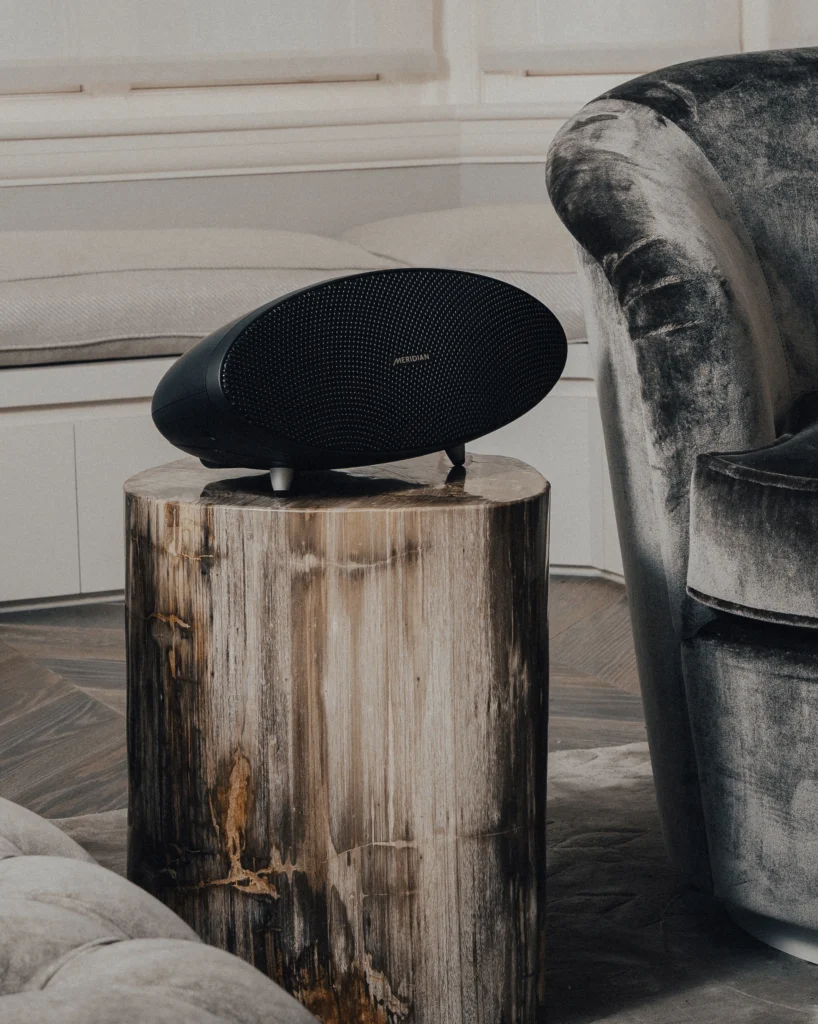
A black oval Meridian active loudspeaker on a petrified wood side table, next to a grey velvet armchair.

Wireless and active

Active speakers carry their own amplification, so the system is the speaker: fewer boxes, a shorter signal path, streaming built in. Klipsch builds this into a compact powered pair. Meridian‘s DSP loudspeakers take a digital feed directly, amplification and signal processing built into the British cabinet. A pair like this suits a study or a second system.

Everything the speaker needs

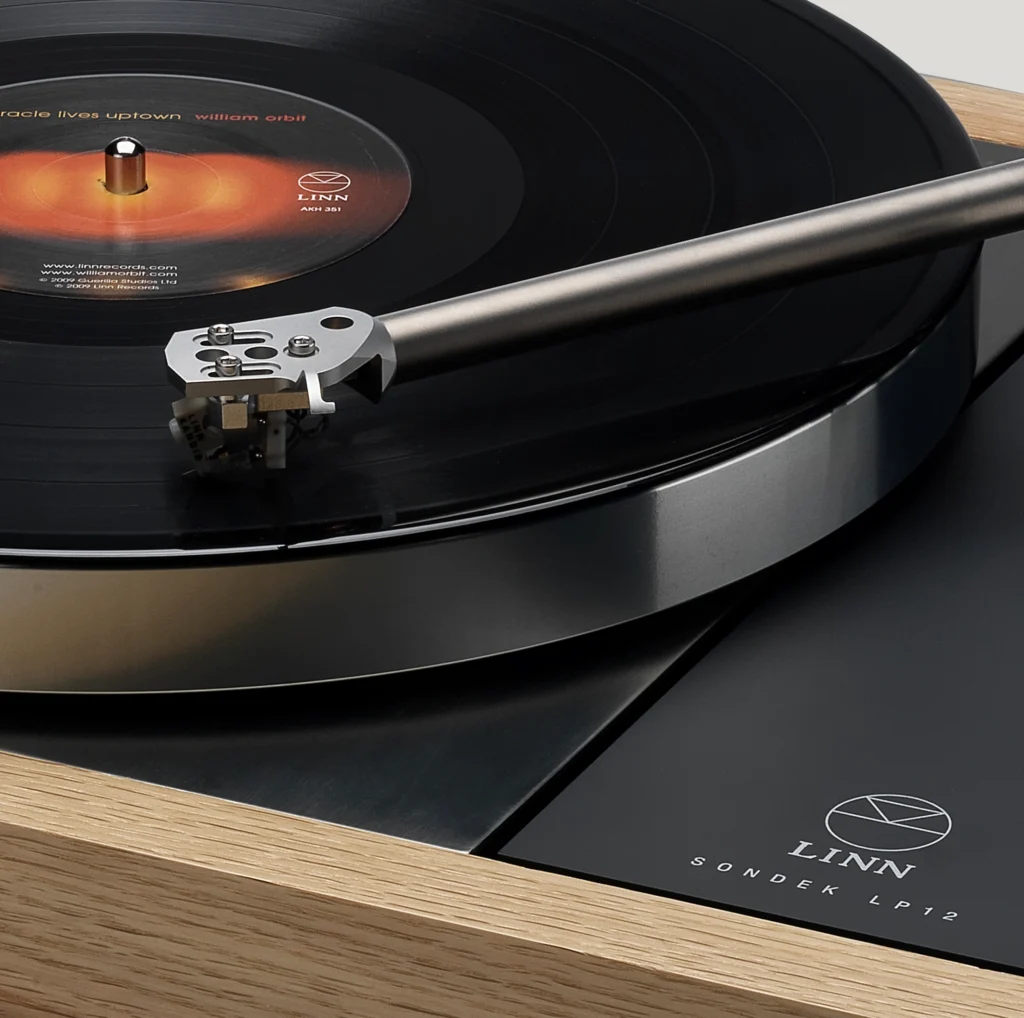
A Linn Sondek LP12 turntable in close view, its tonearm and cartridge tracking a Linn Records LP on the platter.

Turntables and vinyl

A turntable is built from parts, not bought as one box: the deck, the arm, the cartridge, and a phono stage to lift the signal to line level. Linn‘s Sondek LP12, in production since 1973, is built to be upgraded rather than replaced. Transrotor builds its decks in Germany, and Sumiko hand-builds cartridges at Excel Sound in Yokohama.

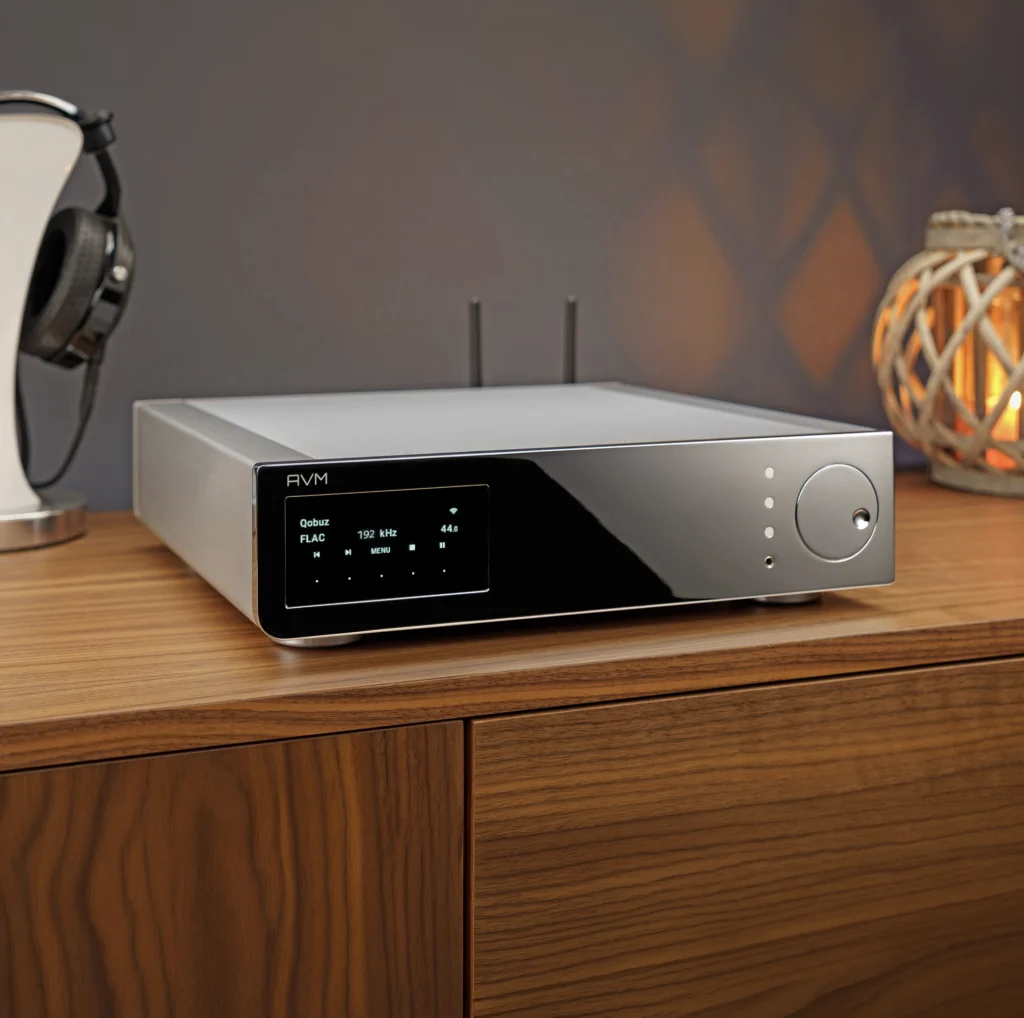
A silver AVM streaming amplifier on a walnut sideboard, its display showing a Qobuz FLAC stream at 192 kHz, with headphones alongside.

Streaming and digital

A network player turns streamed music into a usable signal, and digital-to-analogue conversion is where the real differences sit. dCS designs and builds its own Ring DAC rather than buying a chip off the shelf. Wattson Audio, from Switzerland, builds its own DAC into the Madison Streamer, keeping conversion and playback in one chassis.

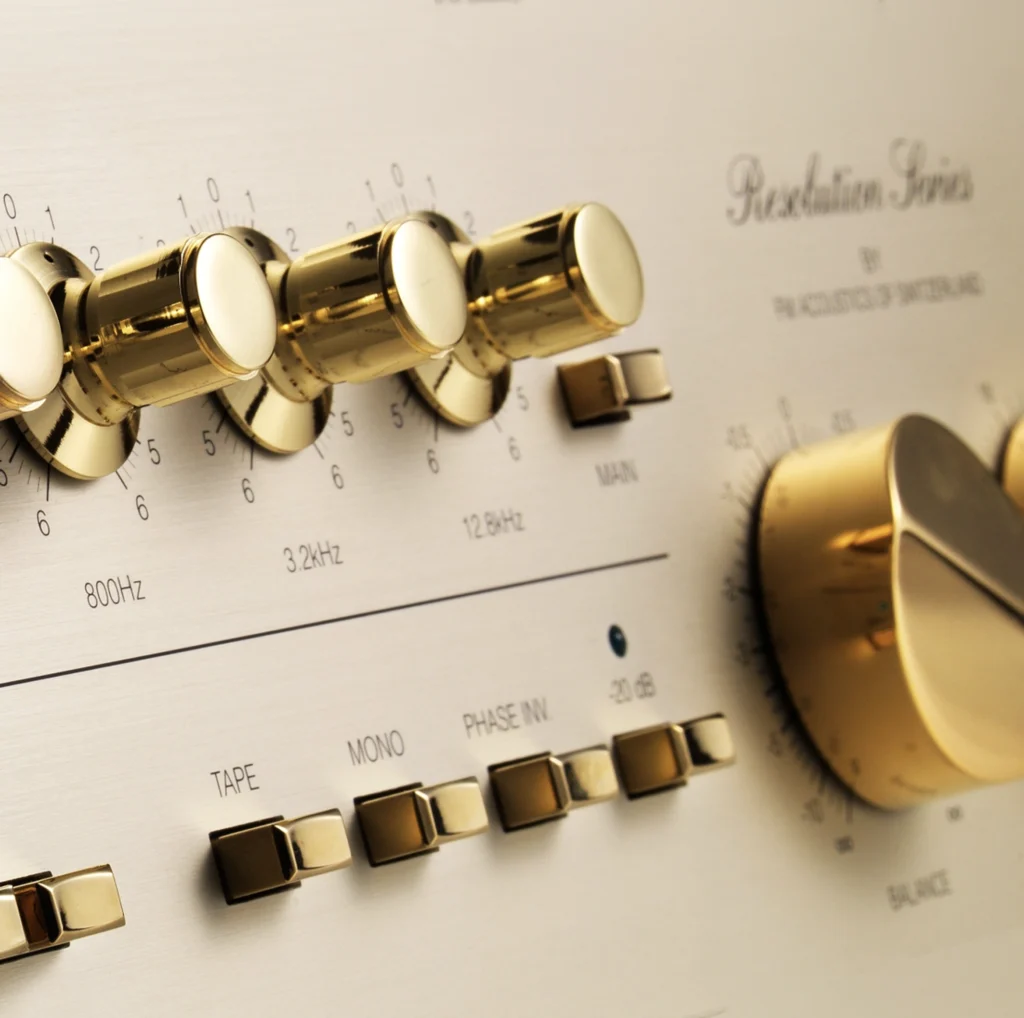
A close view of an FM Acoustics Resolution Series preamplifier front panel, with gold level knobs and frequency controls on brushed champagne.

Amplification

An integrated amplifier puts the preamp and power stage in one chassis; separates split them into two, sometimes three, for cleaner power and less interference between stages. Boulder builds its electronics for the recording studio first, then the living room. FM Acoustics, independent and family-owned in Zurich, builds its own linearizers and crossovers rather than adapting off-the-shelf designs.

Selected work

Two systems, priced

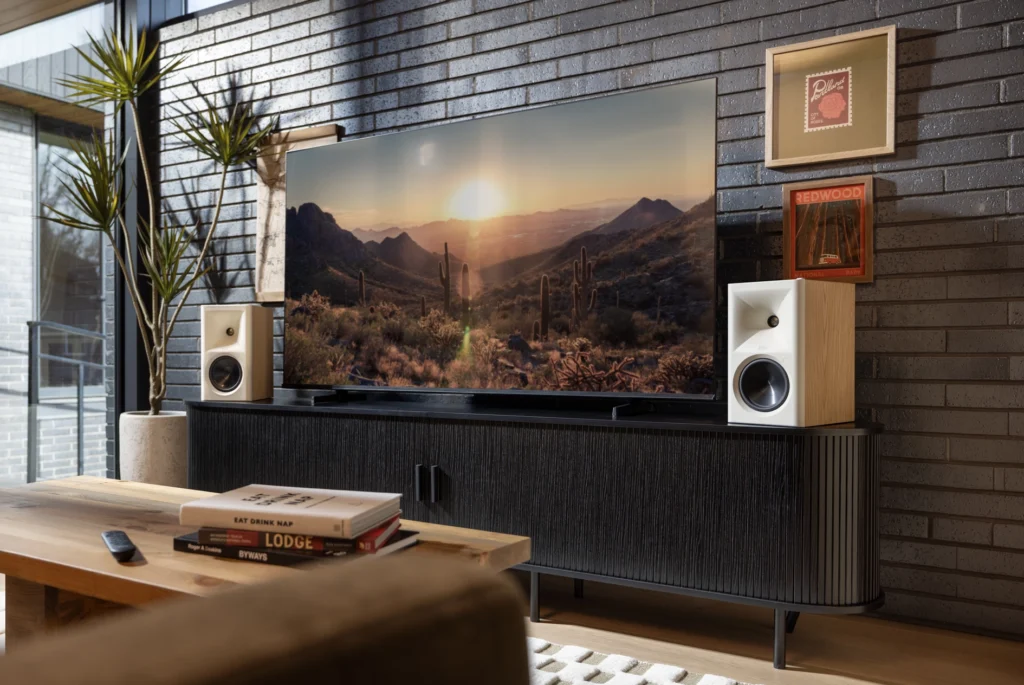
Two compact speakers in oak and white either side of a wall-mounted television above a black media cabinet in a living room
A complete system in two boxes: no separate amplifier, no rack of components to add later, just a pair of speakers and a source.
The Fives II carry their own amplification and streaming, with inputs for a turntable or a television built in, so there is nothing else to plan around.
$2,999 $2,399
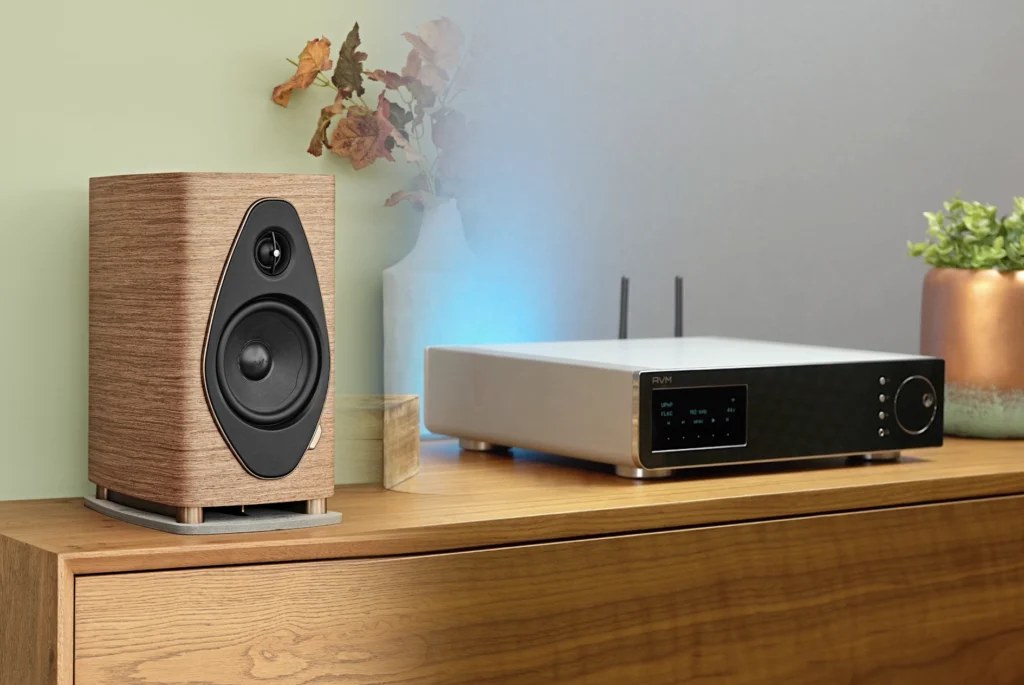
A walnut-finish bookshelf speaker beside a silver network streamer on a wooden sideboard

AVM AS 2.3 + Sonus Faber Sonetto II

One amplifier, one pair of speakers, one path from source to sound, chosen as a pair rather than assembled piece by piece.
The AVM AS 2.3 integrated amplifier, with streaming built in, drives a pair of Sonus Faber Sonetto II stand-mounts: two components chosen to work as one.
$11,850 $9,899

Let's design your sound

Tell us about the room and how you use it. We will take it from there.
START A PROJECT

Let's talk

Tell us a little about your space and how you’d like to listen.